

Handleless Modular Kitchens: A Kitchen Design Trend for Urban Homes
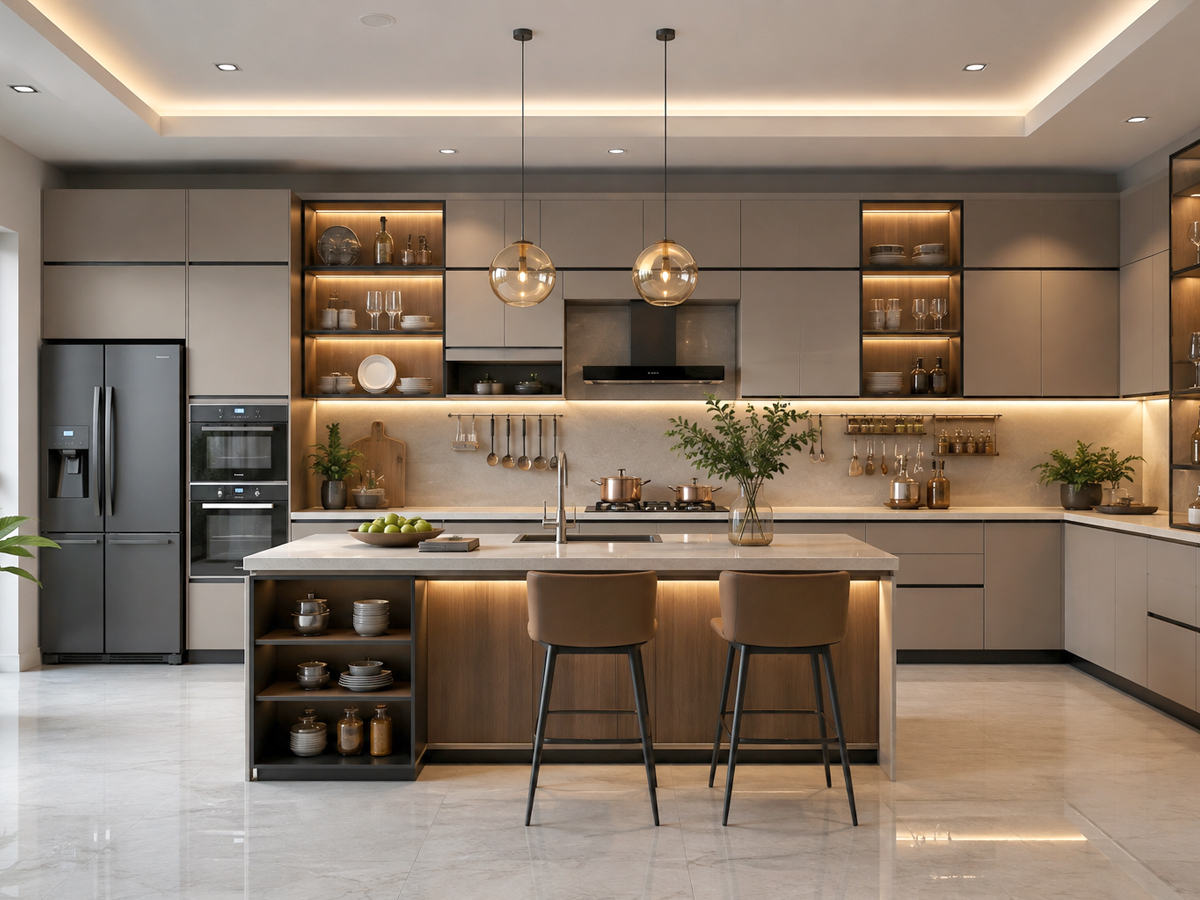
A modular kitchen widely seen in contemporary urban homes today, is a modern kitchen design solution that combines multiple modules together to maximise on space, style and functionality. These prefabricated modules include base cabinets, wall units, corner units, vertical towers, storage drawers, and open shelves, which are manufactured in the factory and assembled on-site. Depending on the homeowner’s requirement and preferences, a modular kitchen design may even include refrigerator modules, built-in electric appliance modules and dishwasher modules. These modules help to clearly demarcate and organise the kitchen space into prep area, cooking area, storage area, and utility area. While earlier modular kitchen designs were fitted with visible handles, the latest modern kitchen design trend favours handleless modular kitchens, making them ideal for contemporary kitchen interiors.
Handleless Modular Kitchen — Meaning and Types
A handleless kitchen is a popular minimalist modern kitchen design style that eliminates visible or protruding handles or knobs from kitchen cabinets and drawers. By using advanced handleless kitchen mechanisms, this design approach delivers seamless lines and smooth surfaces, making it a preferred choice for contemporary modular kitchens in urban homes.
Here are some of the common types of handleless modular kitchens: –
Integrated Edge Profile
An integrated edge profile, also referred to as an integrated handle or edge pull is a handleless design feature built directly into the door or drawer edge. In this system, the shutter edge is routed or shaped to create a recessed and continuous channel, allowing fingers access without the need for external handles. It is commonly used in base cabinets (along the top edge) and wall cabinets (along the bottom edge), typically with shutter thickness ranging between 18mm to 22mm. The integrated edge profile mechanism can be installed in both, horizontal and vertical cabinets to lend a uniform and modern kitchen appearance. Some of the commonly used integrated edge profiles include the Gola system, J-pull profile, U-pull profile, C-pull profile and bevelled edge pull, all of which contribute to a refined handleless kitchen design.
- Gola Profile System
In this handleless kitchen design, a continuous aluminium channel (gola) is mounted onto the cabinet carcass or frame, rather than being attached to the cabinet door or drawer front. This design keeps the cabinet shutters visually smooth and uninterrupted, while the recessed gap behind the door or drawer allows easy access for fingers to pull it open. The Gola profile only stays visible as a slim metal channel. Known for its minimalist style, durability and ease of use, the Gola system is one of the most popular mechanisms used in modern handleless kitchens.
- J-pull
The J-pull profile is another widely adopted handleless kitchen mechanism, where the cabinet door itself features a J-shaped recessed groove that functions as the invisible handle. For upper cabinets, J-shaped edge is carved along the bottom edge, while for base cabinets and drawers, the recessed groove is along the top edge of the shutter. It is widely used for both cabinet doors and kitchen drawers, offering a minimalist kitchen design suitable for contemporary urban homes.
- U-pull
The U-pull profile features a recessed channel cut into the edge of the door or drawer in a distinct U shape. It offers more finger clearance than a J-pull profile, offering an ergonomic and comfortable grip. While maintaining a clean, handleless look, the groove is slightly more visible than the J-pull profile, making it both functional and visually defined. This type of design is ideal for kitchens that prioritise ease of use.
- C-pull
The C-pull profile is like the U-pull or U-profile but offers a subtler and less pronounced grip. Designed with a squared, shallow recessed channel resembling a C-shape, it delivers a sleek and understated appearance. This profile is commonly used in contemporary kitchens, where minimal detailing and refined aesthetics are key.
Integrated Shutter Profile
Slightly different from an integrated edge profile, the integrated shutter profile is built directly into the cabinet door. The subtle handleless mechanism features a 45-degree angled or chamfered edge milled into the top or bottom edge of the door or drawer. In some designs, it may also include a discreet integrated edge pull, in the form of a small-recessed grip at the edge of the panel. This profile delivers a seamless appearance ideal for modular kitchens.
Recessed Handle Channel
The recessed handle channel often referred to as Shadow Gap, is frequently confused with the Gola profile system. However, unlike Gola profiles, this handleless solution does not use aluminium profiles or channels. Instead, a cut-out gap is created between the cabinet carcass and the shutter. The recess is part of the cabinet structure, where the shutter edge stays plain and straight. With no visible metal profiles, this option is simpler to construct. Recessed handle channels work especially well for tall units and are a popular choice for budget-friendly handleless kitchen designs.
Push-to-Open Mechanism
Push-to-open mechanisms also known as touch-to-open or tip-on systems, offer one of the cleanest looks in kitchen cabinetry. Using either a spring-loaded mechanism or magnetic mechanism, these systems allow cabinet doors and drawers to open effortlessly with a gentle press. This enhances ease of access while maintaining a sleek handleless appearance, making push-to-open systems a popular choice for contemporary kitchens. However, they are best suited for light to medium-use cabinets and are not recommended for heavy and high-frequency drawers.
Electric/ Servo Drive (Sensor based)
Electric or sensor-based servo mechanisms are a hallmark of luxury kitchens. These advanced motorised systems allow cabinet doors, drawers and even built-in appliances to open using touchless gestures. Unlike mechanical push-to-open systems these servo drives or servomechanisms rely on sensors and integrated motors for operation. While this is the most expensive handleless kitchen solution, it is ideal for high-end designer kitchens, senior-friendly kitchens and kitchens for people with limited mobility.
Advantages and Disadvantages of a Handleless Modular Kitchen
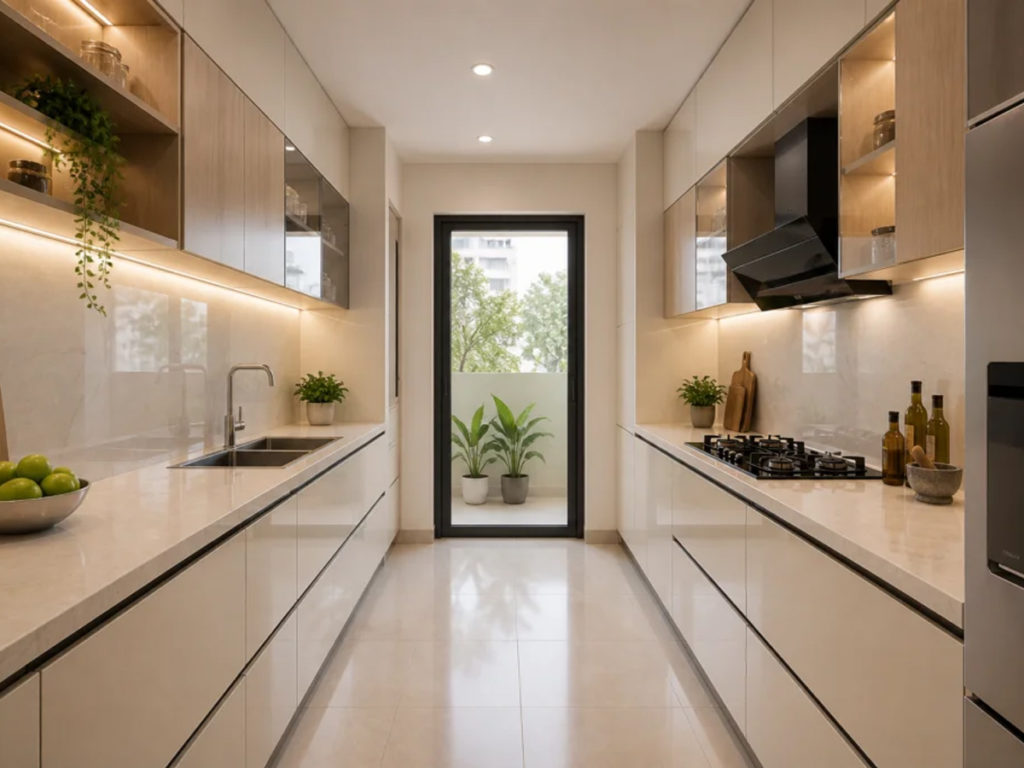
The one design trend for urban homes that has been around for some time is — handleless modular kitchens. Here are some of the advantages and disadvantages to consider before opting for a handleless modular kitchen: –
Advantages of a handleless modular kitchen
- Provides a clean and contemporary cabinetry look perfect for minimalist interior design
- Creates simplicity with unbroken visual line and aesthetic flow
- Suitable for smaller kitchens and corner cabinets where handles get in the way
- Easy to wipe down a smooth surface without protruding handles
- Improved safety for children as there are no protruding handles or knobs
- Complements various design styles
Disadvantages of a handleless modular kitchen
- Handleless cabinets/drawers cost more than conventional cabinets/drawers with handles or knobs
- Require professional installation
- Need regular maintenance as recessed rails and grips also accumulate dust
- High-gloss handleless cabinets may show-up fingerprints easily
- Not very practical for people with long nails or less hand strength due to arthritis
- Don’t look good in older or more traditional kitchen designs
Handleless modular cabinets have firmly established themselves as a defining element of modern kitchen design for urban homes. With their clean lines, seamless surfaces and innovative mechanisms such as integrated edge profiles, recessed handle channels, and push-to-open, these handless cabinets create an elegant clutter-free look for contemporary kitchens. Designed to maximise efficiency, durability and ease of handling, modern handleless kitchen designs not only enhance visual continuity but also improve workflow. Whether paired with high-gloss or matte finishes, handleless modular kitchens continue to emerge as a timeless trend making them a smart investment for stylish modern homes.