

Interior Design Trends 2026: Why Indian Homes are returning to Vaastu Principles
Vāstu-Śastra (Sanskrit: वास्तु शास्त्र, vāastu śāstra) also known as Vaastu or Vastu, is the ancient doctrine of architecture. Although the divine science finds mention in the Arthashastra, it was only during the sixth century CE that dedicated chapters on principles of architecture appeared in Varahamihira’s Brihat Samhita. Rooted in scientific thinking, it covers every aspect from preparing the ground, planning the layout, optimising space and working on symmetry. Vaastu is a blend of scientific concepts aligning natural elements to find the perfect balance in architecture methodology. Originally, applied to the design of Hindu temples, forts, palaces, and traditional homes, it has now spread to contemporary home interiors. As urban lifestyle is becoming more fast-paced, Indian home interior design trends 2026 are returning to Vaastu principles to infuse positive energy. Today, Vaastu has become a practical guide to design interiors that balance natural elements to enhance positive living. https://www.nppartners.net/2026/03/13/feng-shui-interior-design-principles/
The ancient science helps to align these five natural elements within a home: –
- Earth (Bhoomi): Represents grounding, stability and strength
- Water (Jal): Symbolises flow, cleansing and emotional balance
- Fire (Agni): Represents positive energy and burning away negativity
- Air (Vayu): Encourages smooth movement and easy communication
- Space (Akash): Symbolises openness, expansion and growth
While designing the home, it is important that the direction of the room, windows, doors, placement of furniture, colours, lighting, etc., incorporate these elements correctly.
Why is Vaastu important in Modern Interior Design?
There is growing demand of Vaastu compliant interiors for modern Indian homes, as it
- Enhances positive energy
- Optimises space utilisation
- Improves functionality and flow
- Improves overall health and wellbeing
- Helps to increase concentration in children
- Attracts better career opportunities
- Brings financial stability
- Reduces conflicts among family members
- Adds peaceful vibes
- Harmonises with nature
Rightly applied Vaastu principles in Indian homes support physical, mental and emotional well-being.
Indian Home Interior Design Trends 2026 aligning with Vaastu Principles
Blending interior design trends 2026 with Vaastu principles in various rooms of the home means to embrace an unapologetic fabulous look with warmth and nature.
1. Repurpose and upcycle
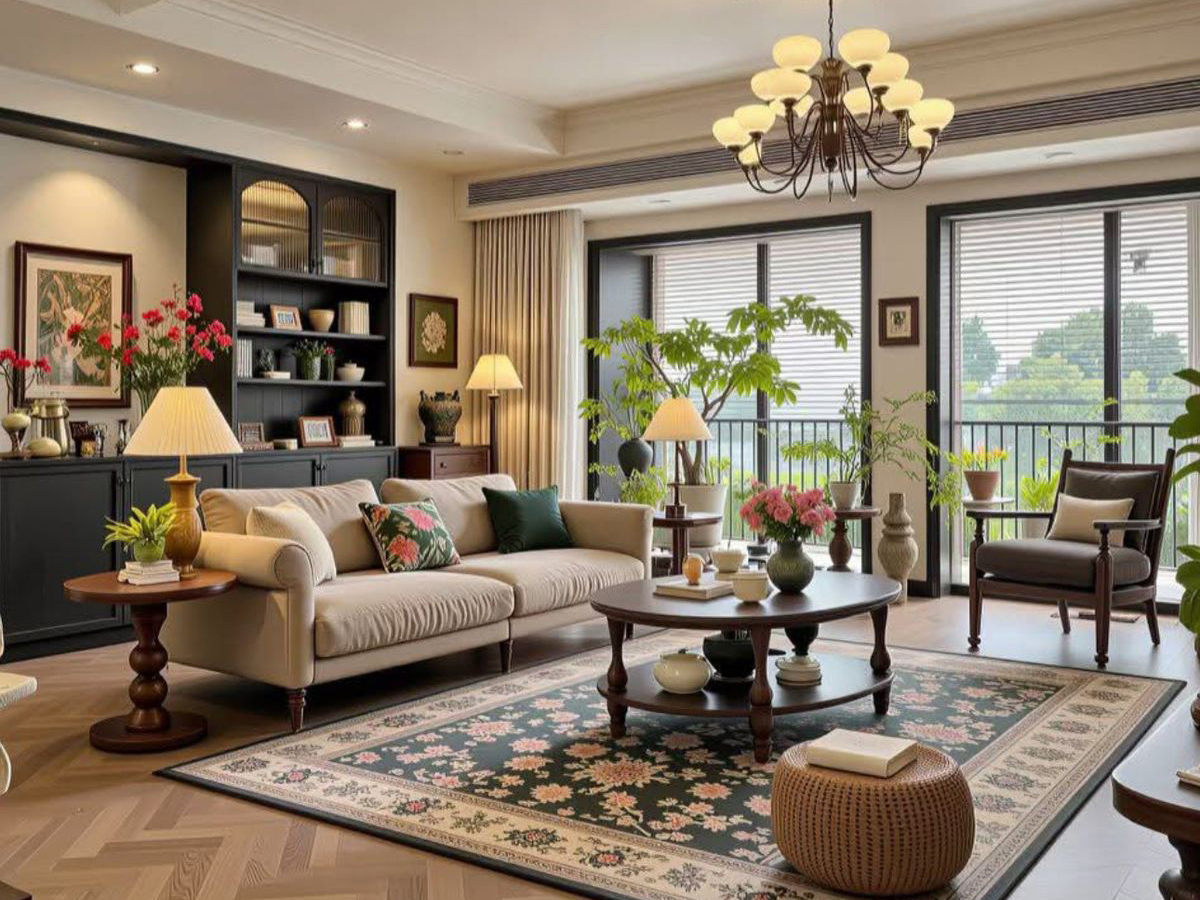
One of the most notable Vaastu-compliant interior design trends for Indian homes in 2026 is the rise of repurposing and upcycling. More homeowners are choosing to refurbish their modern homes with reclaimed teakwood furniture, old copper utensils, vintage décor and antique items. According to Vaastu principles, reusing and reinventing old unused pieces into dynamic useful pieces removes old stagnant energy (Tamas) and injects positive energy (Sattva). Additionally, Vaastu strongly supports the use of eco-friendly materials as they align the home with five elements (Pancha Mahabhutas) to create a happy and balanced home environment.
2. Warm mini-maximalism
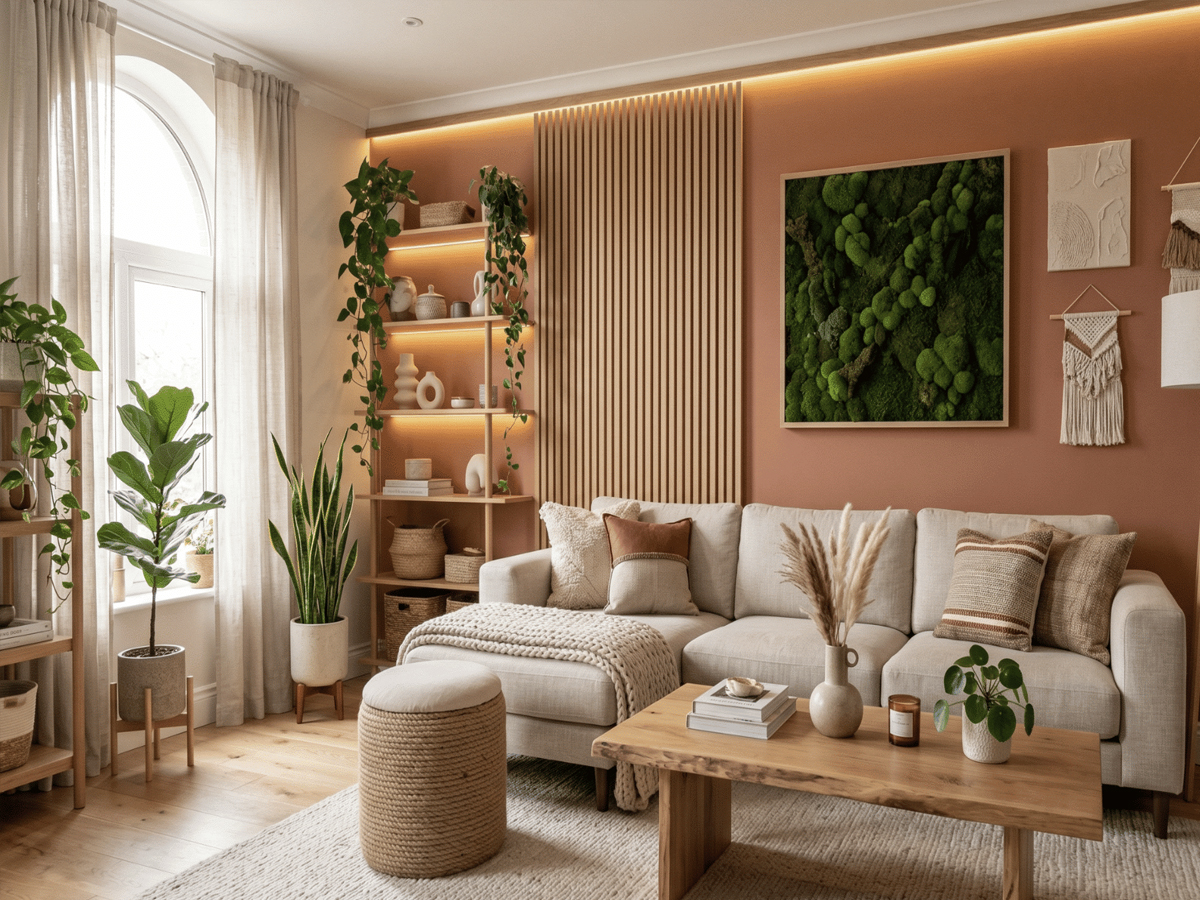
Modern homes in 2026 will embrace character, warmth and even imperfections. The emerging warm mini-maximalism trend blends the idea of minimalism with the richness of maximalism – bringing together clean lines, layered patterns, bold accents and an inviting lived-in feel. The warm aesthetic resonates the feel of being lived-in creating a conscious home that amplifies emotional and spiritual well-being. At the same time, the balanced mini-maximalism design ensures the home never fees cluttered by keeping the Prana (life force energy) flowing freely throughout the house.
3. Layout and Placement
In 2026, Indian interiors designers are paying far greater attention to the layout of the home and the placement of furniture and décor objects to invite good energy indoors. Many homeowners are following Vaastu tips and guidelines to support harmony and attract good health and wealth to their homes. Some of the most widely followed Vaastu rules include orienting the entrance to north/east/northeast to welcome positive energy, placing bedrooms in southwest for grounding and restful sleep, designing the kitchen in southeast (Agni corner), to align with fire element and keeping the pooja room in northeast (Ishanya corner)—the most sacred direction. Integrating Vaastu directions into modern home layouts not only elevates functionality but enhances clarity and fills the mind with positive vibrations.
4. Good lighting
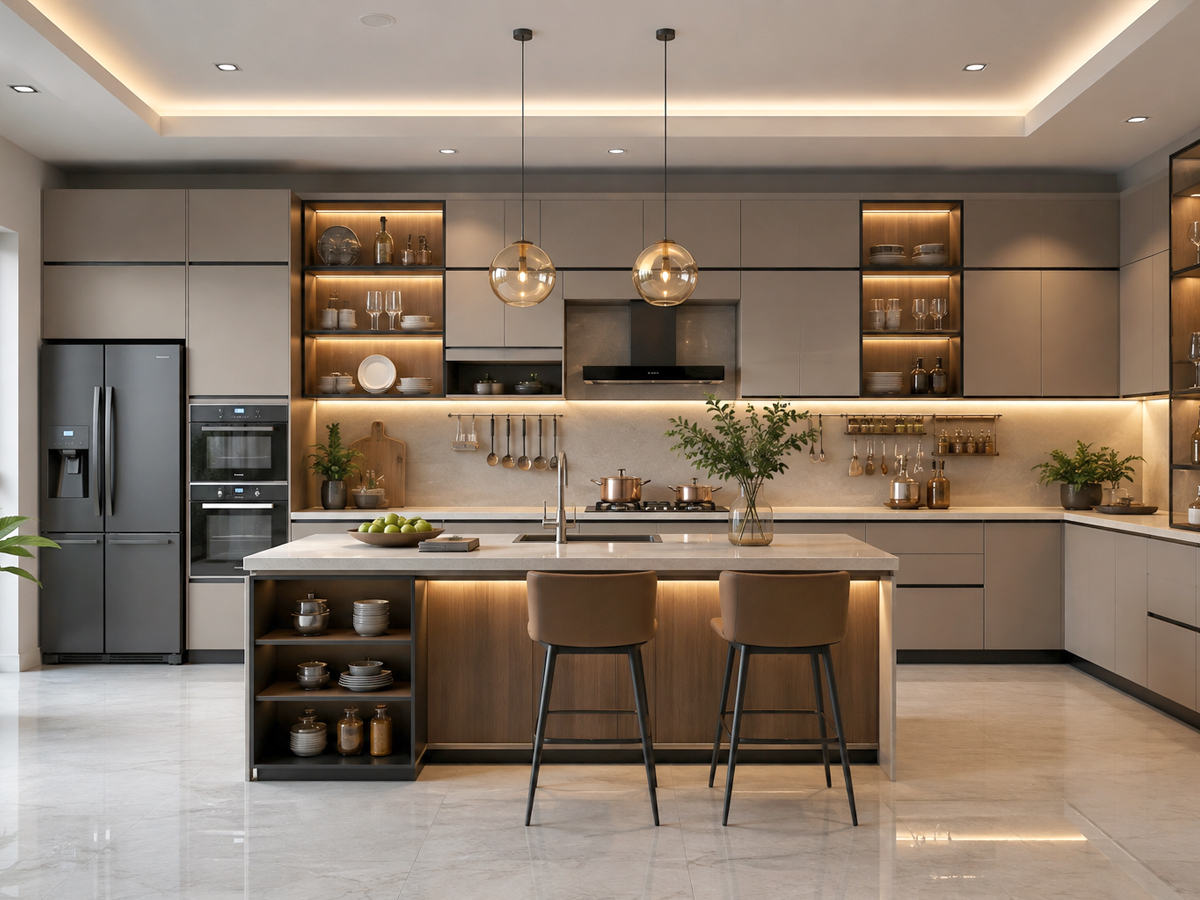
In contemporary homes, lighting serves both aesthetic and functional purposes—but in Vaastu it carries a deeper meaning. In Vaastu, light represents the fire element (Agni) which uplifts mood and reduces stress. According to Vaastu, different zones require different lighting treatments. The Southeast (Agni) and North, benefit from bright lights that support activity.
Northeast (Ishan) and southwest zones thrive with soft diffused lights that nuture peace. Incorporating, sculptural lighting, smart lighting systems and layered lighting helps align illumination with Vaastu principles. Additionally, natural sunlight is considered cosmic energy (Prana) a life-force in Vaastu, essential for a healthy home.
5. Colour
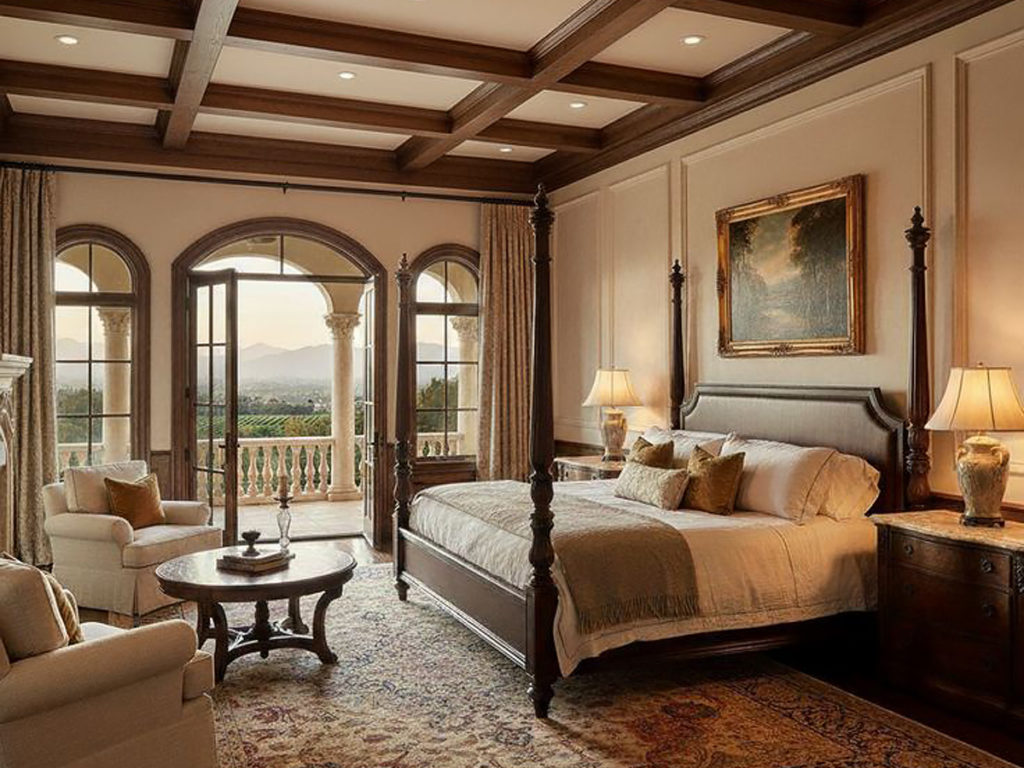
Colour plays a crucial role in Vaastu because it directly influences the energy flow within a home. Each direction corresponds to one of the five elements, and therefore has colours that enhance its energy. For example, light blue/mint green is used in north (water zone) living room, red/orange/pink energises the southeast (fire zone) kitchens. Beige, taupe and earthy colours strengthen the southwest (earth zone) perfect for master bedrooms. Similarly, off-white is used in Northeast zone, yellow in East, red in South and metallic tones in West. When chosen thoughtfully, the right colour uplifts energy of each zone, creating stability in the home. Colour can even be used to correct a minor Vaastu imbalance.
6. Biophilic Interior Design
Another interior design trend expected to spill over to 2026 is biophilic interior design. Although biophilic design is often described as an emerging concept, its core philosophy has long been embedded in Vaastu shastra. Biophilic interiors focus on strengthening the connection between nature, humans and living spaces by incorporating plants, sunlight, water, natural materials, and organic shapes into home design. Features such as green walls, indoor plants, large windows, water fountains, wood, and stone material, work together to boost overall wellbeing. Plants like bamboo, holy basil, peace lily and money plant, placed in the northeast/north/east zone increase Prana (life force energy) promoting vitality within the space.
7. Smart Living
Smart living and Vaastu, though seemingly very different, complement each other seamlessly in modern Indian homes. In smart home interior design, advance technology works in harmony with the functional principles of Vaastu Shastra. Example, smart air conditioners/exhaust fans regulate the air element, smart warm/cool lights help to balance the fire/water element, and smart sound systems influence the space element. Similarly, robotic vacuums/smart trash systems maintain a clean environment strengthening the earth element. Basically, smart living follows the natural rhythm of Vaastu principles, to create spaces that are efficient, balanced and energetically aligned.
Summary
Indian home interior design trends for 2026 reflect a clear and growing shift towards Vaastu-compliant living spaces. Interior designers are witnessing a strong comeback of Vaastu principles in interior design. As homeowners increasingly seek balance, wellbeing, and positive energy, ancient Vaastu principles are being thoughtfully integrated into modern home designs. Every Vaastu home focuses on treating different zones with natural elements to enhance visual tranquillity and energise the home with positivity. Entrances, clutter, room layouts, greenery, colours, materials, mirrors and more play are being addressed in Vaastu interior design philosophy. The age-old science of Vaastu shastra is here to stay making homes energetically balanced and future-ready.