

How to style Wood, Metal and Stone in Home Interior Design
Modern home interiors are redefining opulence. Luxury homes are increasingly being styled using a mix of materials like wood, metal and stone to enhance both aesthetics and functionality. Leading interior designers are embracing this mix-and-match approach to create luxe interior designs that feel balanced and timeless. While wood, metal and stone are basic materials, each brings a distinct texture, tone and vibe to a space. Thus, to achieve cohesive and chic interiors, it is important to understand how to style wood, metal and stone in home interior design.
Materials Used in Home Interiors – Wood, Metal and Stone
Wood has been used for generations to build and decorate homes. From durable teakwood beams to elegant oakwood flooring, different types of woods are widely used in modern home interiors. Wood can create a traditional home aesthetic, a rustic farmhouse look, or a contemporary minimalist style, depending on the design approach. It adds warmth, texture and natural richness to living spaces and is most commonly used for furniture, flooring, wall panelling and decorative elements.
Metal is widely preferred in home interiors because it is durable and easy to maintain. Materials like steel, brass, and copper are used in modern homes to create unique home interiors. While steel lends a sleek industrial or contemporary vibe, brass and copper are often used strategically to add warmth and provide a traditional touch. Metals are extensively used in furniture, hardware, lighting fixtures, decorative accents and architectural elements.
Natural stone brings a timeless elegance to indoor-outdoor home designs. Today a wide range of materials such as marble, granite, quartzite, limestone, sandstone and slate are used in flooring, kitchen countertops, accent walls and outdoor features. Stone is valued for its durability, aesthetic appeal and weather resistance, making it an ideal choice not only for interiors but also for home exteriors and architectural facades.
How to style Wood, Metal and Stone in Home Interior Design
The optimal usage and mixing of wood, metal and stone elements in home interiors can elevate the overall look and feel of a space. When styled correctly, these materials create balance, earthy aesthetics, visual interest and a sense of sophistication. Here are a few expert tips on how to mix wood, metal and stone in home interior design: –
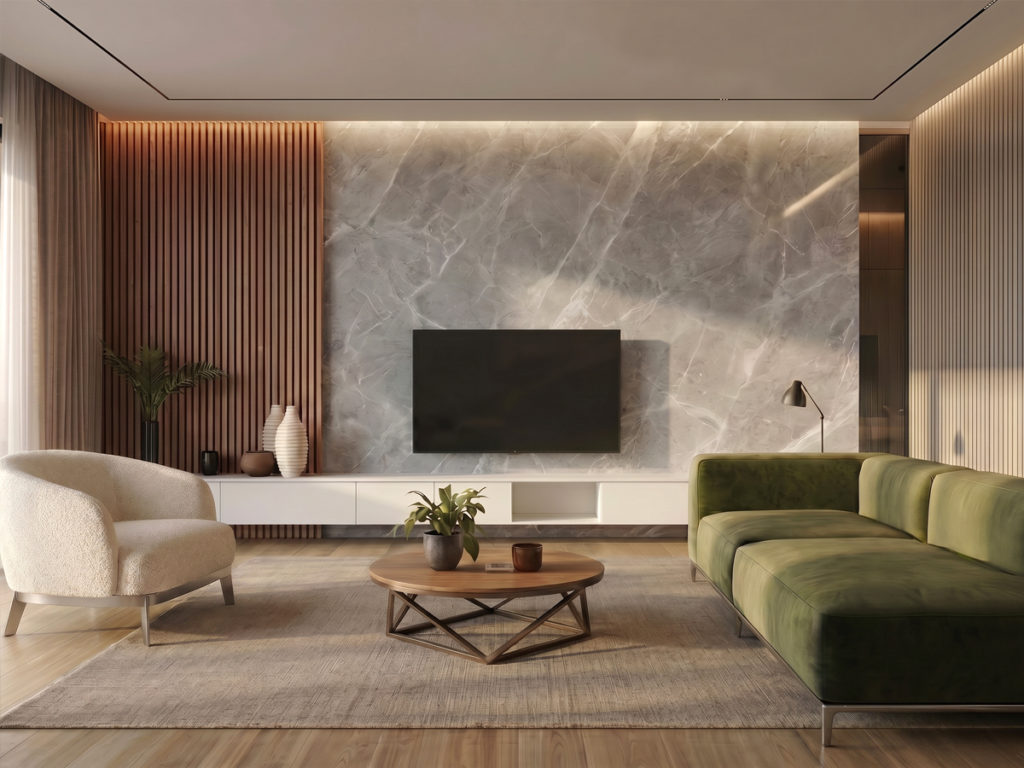
1. Follow the 60-30-10 rule
One of the most effective principles when mixing materials like wood, metal and stone is the 60-30-10 rule. Allocate 60 percent of the room space to a dominant material, 30 percent to a secondary material and 10 percent to an accent material. This proportion helps maintain balance and prevent any one material from overpowering the design. Depending on the layout and style of the space, these materials can be used effectively to add warmth, contrast and a refined luxury appeal.
2. Repeat the material
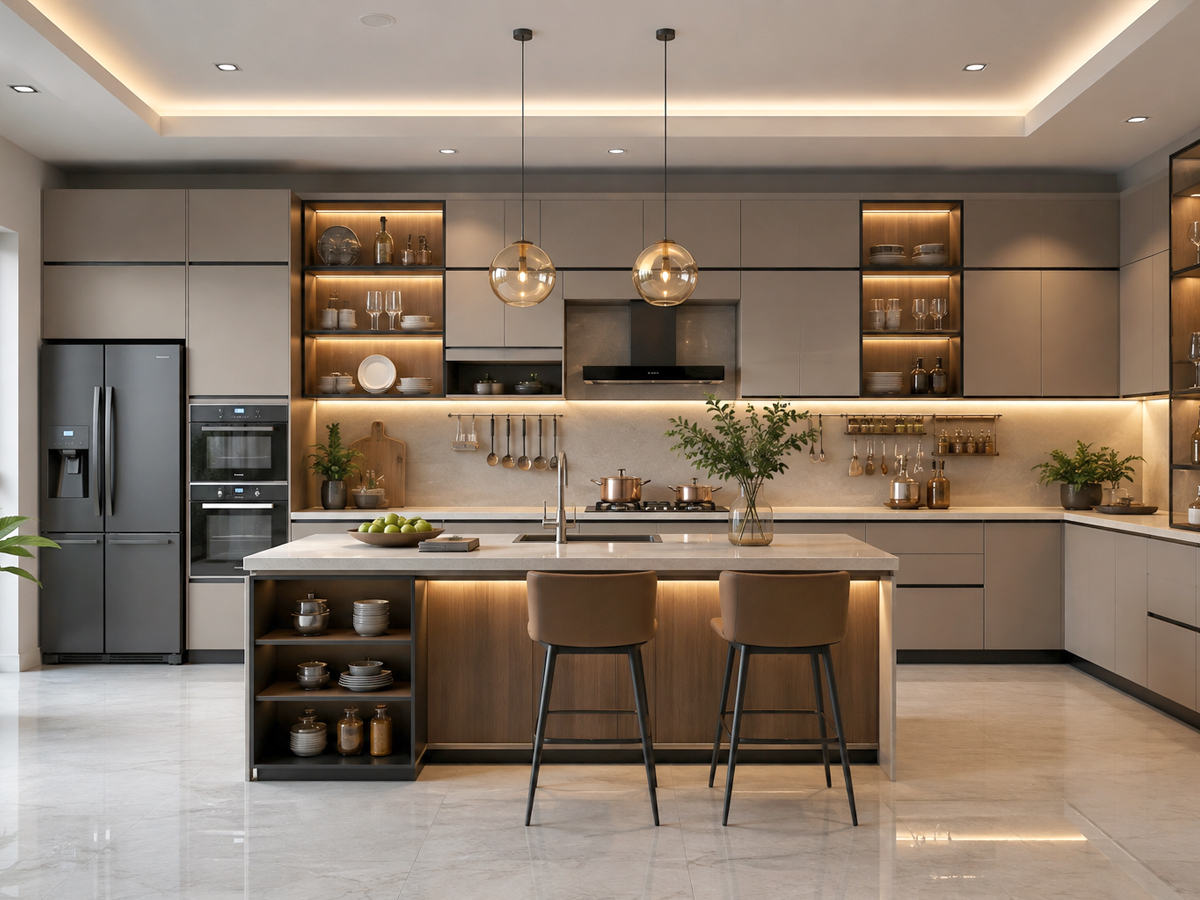
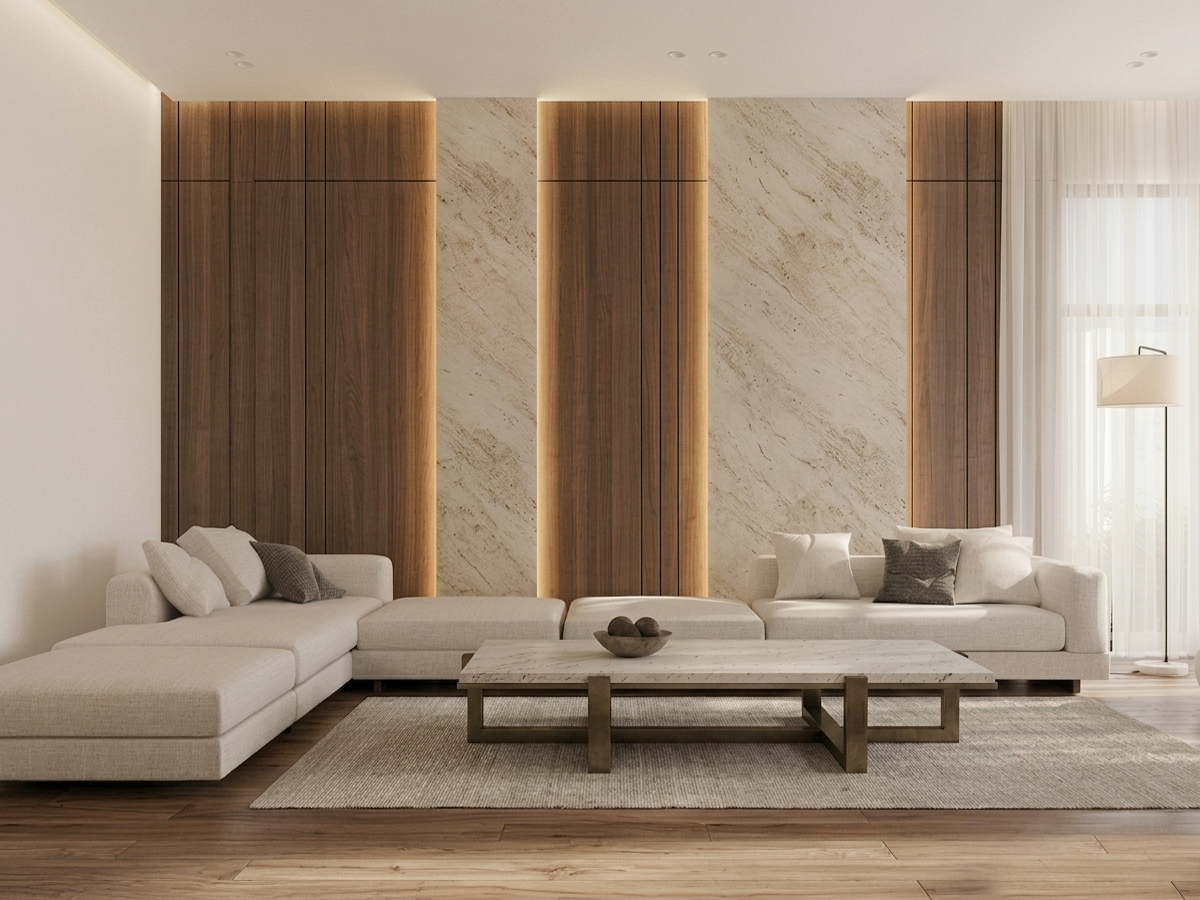
While following the 60-30-10 rule, it is equally important to repeat each material at least twice within a space to create visual harmony and flow. Repetition helps establish continuity and flow in interior design. For instance, in a bedroom, wood can be introduced through both furniture and flooring. In a living room, stone can be repeated using stone wall cladding and complementary décor elements. Similarly in the kitchen, metal finishes in sinks can be mirrored with matching hardware and light fixtures. Repeating wood, stone or metal at least twice in a room ensures a thoughtfully designed interior.
3. Use one material as focal point
When designing with wood, metal and stone in a single room, it is important to let one material lead as the focal point. For example, in a living room an oversized mirror with a brass detailing, placed above a granite-topped table with brass accents, can become a striking focal feature. To maintain visual interest, ensure the brass frame colour coordinates with other furniture pieces or artefacts in the room. Additionally, when mixing materials, choose the focal material that aligns with the larger design style like traditional Indian or art deco. Once the main material is established, work subtly with the other two materials to create a well-balanced space.
4. Coordinate or contrast undertones and textures
While mixing wood, metal and stone in home interior design, it is important to understand warm and cool undertones. Interior materials usually fall into two undertone categories – warm and cool. Metals like steel and chrome and wood like maple have cool undertones, while brass, copper, cherry wood and mahogany echo warm undertones. To achieve a well-balanced interior design, either coordinate similar undertones or intentionally contrast them. In addition, layering textures in home interiors ensures the materials blend together enhancing visual interest. Combine rough stone with smooth wood or matte wooden finishes with polished metal accents to add depth and balance for luxe interiors.
5. Introduce organic elements
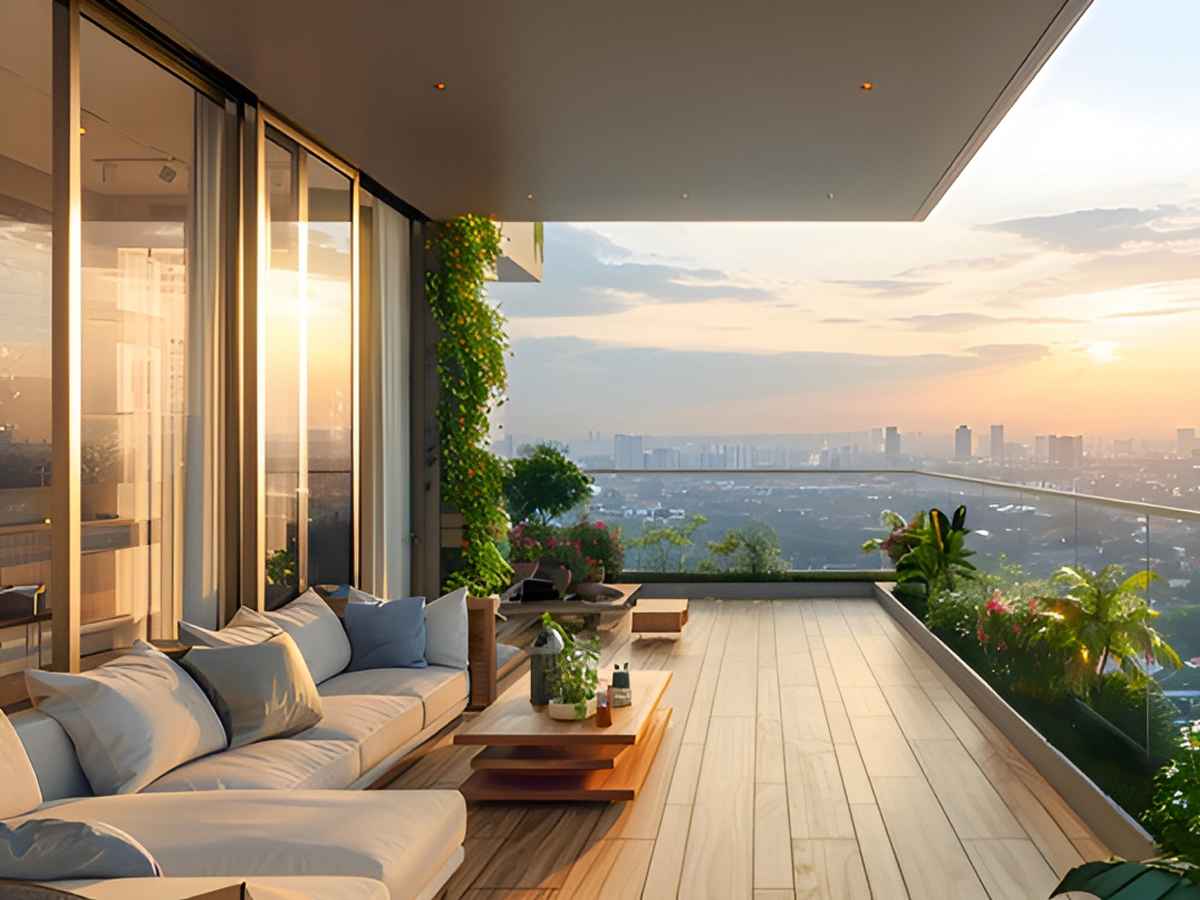
Another effective way to blend wood, metal and stone in interior design is by introducing organic elements into the room. Key strategies include incorporating natural organic materials, nature-inspired features, plants, natural textures and using organic shapes and forms. Decorative timber, jute rugs, curvy rattan furniture, stone water fountain and live plants when placed thoughtfully, can heighten material harmony, create free-flowing silhouettes and soften the overall look of the space.
6. Consider room lighting
Good lighting plays a crucial role in interior design when mixing materials like wood, metal and stone together. The right combination of natural and artificial lighting emphasizes material textures and surface finishes to create visually pleasing aesthetics. Warm lighting brings out the natural grain and warmth of wooden furniture, accent lighting highlights stone cladding and textured surfaces, while direct or focused lighting enhances the shine and reflectivity of metal elements such as brass, steel and chrome. Layered lighting techniques including ambient and task lighting, help balance wood, metal and stone in modern home interiors.
7. Unify with cohesive colour palette
Colour plays a prominent role in interior design, unifying wood, metal and stone. The right colour palette acts as a solid visual backdrop, helps balance warm and cool tones, highlights material textures, and defines the overall mood of the space. Cool colour palettes like greys, blues and muted neutrals pair seamlessly with metal finishes and stone surfaces, while warm colour palettes like cream, deep red and earthy tones complement wooden furniture, natural stone artefacts and warm metals like brass and copper. Also, introducing a bold accent can further highlight an architectural feature allowing wood, metal or stone to stand out in home interior design.